26 stories
·
0 followers

reading and how to do more of it

1 Share
Philosophy Presenting the Seven Liberal Arts to Boethius. source: https://www.worldhistory.org/image/14357/philosophy-presenting-the-seven-liberal-arts-to-bo/

This is part 3 of what is turning into a massively long set of thoughts about what I do to try to make myself into what an AI-generated post promised, a “disgustingly educated person”. I got so annoyed by this post and its low expectations for the human mind that I started writing and haven’t stopped yet. I just cannot tell you for example how filled with fury it makes me that there are now TWO illustrations on this post showing glasses resting the WRONG WAY UP on a book. You will scratch the lenses! It’s like the AI is laughing at us.

Part 3 is about ‘reading books’ which is obviously a subject on which I could write 100,000 words, so please treat this as just ‘some extracted jottings’.

It is of course a vital question for right now. The world is full of articles like this one (you can read it for free if you sign up to the website), about how students are turning up at university unable to read. This isn’t caused by laziness, the author says: “When a student tells me they “kept losing track” of a 20-page article, I have to acknowledge that they may be describing a measurable neurological condition. The neural pathways that support sustained attention are built by use, and they atrophy without it. Your body is a use-it-or-lose-it system, and the brain is no exception.”

It is a crisis and those of us who are over 22 can’t help if we are also succumbing to the not-reading epidemic. Genuinely almost everyone I know, including very serious novelists and intellectuals, have experienced this problem at least a bit in the past few years. All of us have had to do some work reminding ourselves that ‘oh yes I do like reading’.

The truth is that so many of us are now addicted1 to our phones. We started before we knew that they were addictive. Otherwise, we would have been much more on our guard.

It was the pandemic that made it particularly bad. We were so starved for company and glued to the news and trapped at home and we got addicted to our smartphones.

There is actually quite an interesting parallel with cigarettes, in which it was the trenches of World War One that got millions of people addicted to them. Tobacco use had been around for a long time but broadly it was seen as a luxury to be done occasionally (fine cigar after dinner) and very low class to be using tobacco all the time in the form of cigarettes. But in World War One, men in the trenches used cheap mass-market cigarettes to steady their nerves. A widely available crutch plus a massive crisis affecting everyone in different ways, and hey presto, you have tens of millions of addicts.

This is a real problem about which we need to be very honest and human with each other. We are the generation who didn’t know, just like the WWI generation didn’t know about cigarettes. We need to be real with each other about how hard it is, and how we’re helping ourselves, what’s working and what’s not.

So it feels like a particularly shocking thing for someone to use AI to give crap generic advice about. This post - and the ones that accompany it - are not generic advice, they are my real thoughts. I do think we need to take this quite seriously and that AI platitudes are likely to make things worse rather than better.

Here is part 1 of my fury with this AI article:

and here is part 2:

And here is my sort-of philosophy of ‘self-education’, which is about why I love this. Which is not because I think it has a lot of status but because it FEELS REALLY NICE and is basically pretty much (sorry) THE ACTUAL MEANING OF LIFE.

so: learning by reading books

This is what the AI post says: “Read, But Like, Actually Read. Read books. Real ones. Fiction, nonfiction, poetry, memoir. Read across genres. If you only read productivity books and self-help, I’m worried about you. Read a romance novel. A war memoir. A book on mushrooms. Let your brain become a house with many rooms. And here’s a dirty secret: you don’t have to finish every book. Life is too short for boring chapters.”

Obviously this has the same problem as all AI-written things which is that it is incredibly generic. It has no personal taste, because it has no person behind it. It is a bunch of platitudes. Which book about mushrooms?! The Mushroom At the End of the World? The Mushroom Murders? Annihilation? The Kew book on the Magic of Mushrooms? The Girl with All the Gifts? (Yes those are all great, enjoy them all. I once went on a Hugh Fearnley Whittingstall mushrooming day, you know.) A real person would never write this list this way because they would have specific things to press on you not a weird generic list. Ugh, I don’t just want to read any romance novel, I want to read something that you have read and are excited to tell me about.

It also doesn’t grapple with the actual problems of reading - the reasons that people aren’t reading, and what it feels like to try to get reading seriously again if you haven’t for a while. ALSO, there is a critical question of how to choose which books to read. Because I’m afraid that while many books are great, some books are really utter rubbish. It has been ever thus. There is a situation where if you read a book and it’s bad/boring/annoying/incomprehensible it can actively stop you reading for weeks. This has happened to me. Not just if I insisted on reading right through to the end if I wasn’t enjoying it.

So here are some of the things I know about how to read.

how to choose which books to read

  1. Read at whim. This idea is from this wonderful book: The Pleasures of Reading in an Age of Distraction. It is different to “all reading is great” - not all of it is great but you can helpfully use your intuition to work out what you want to read next. If you want a first book to kickstart a reading habit, that book itself is a lovely place to start. Wander around a bookshop (or better, a library) and see what attracts you. Or just pick something at whim from your TBR pile. He’s very against reading according to a ‘plan’, and I understand why, it can suck the joy out of the whole thing.

  2. But I think this is easier if you already have a well-cultivated erm ‘mind-garden’ - if you have tons of ideas about what books to read then you’re doing well and don’t need help. But if you’re just going “oh yeah, I used to have that” or “I see people have that, but how do they get it?” then the question of how to decide what to read is really quite crucial. Don’t be surprised if it takes a while. “Knowing which are the good books” or actually “knowing which are the good books for me” is a skill like any other and you need to put some time and thought into developing it.

  3. There is a question about whether you should be choosing very easy books or harder ones and - can I just really suggest that you pay strong internal attention to what is happening when you’re actually reading the book? If you are drawn to go on, then that is the right book for you. If you’re feeling bored, try a different one. But also see below (“to keep reading”) on what to do when your mind wanders which is a different thing to ‘feeling bored’. I think that “just read a few thrillers” is to reading advice what “just take a hot bath” is to destressing advice. Taking a hot bath is really lovely, thrillers are great. But a hot bath isn’t right for everyone, and not everyone likes a thriller. And sometimes when you’re stressed you need to eg exercise or write an angry letter and not send it, ie you need something more active. To get yourself reading what you need is not the most simple thing but the thing that is most enticing to you which holds your attention. It might be a simple unchallenging book! I have just personally found that basically the advice to try simple unchallenging books mostly doesn’t work for me when I’m in a reading slump, it just makes it worse. I often need something short but with a lot to it. Here are a few recommendations:

    1. if you fancy non-fiction, Janet Malcolm books are brilliantly short, and filled with good stuff.

    2. please please do not discount short stories. They are out of vogue right now but they are SUCH a good way to sample a wide range of writers and styles and get a sense of what kind of thing you like. Scrolling down this list on Reddit I thought, yup, a person could read one of these a day for a month and end up really having a good sense of what kind of thing they want to pursue more of.

    3. reading a great play is often excellent. You can read The Crucible in a couple of hours, and then you’ve understood one of the great works of literature.

  4. To find older books that might appeal to you, think about previous books you’ve liked and what they had in common, and how you found them. Follow people who seem to like the same books you like. A fun trick is to google the names of three books you love “in quote marks like this” and see if anyone else is talking about specifically those three, because chances are you might enjoy the rest of their taste.

  5. I know this might be very obvious but: to find new books, read book reviews. There are still a load of newspapers and magazines that do wonderful book reviews. This is a great site that aggregates book reviews.

  6. Alan Jacobs advises against ‘reading by reading list’ which I totally understand BUT casting your eye over some reading lists, and even better finding out why those books are on those reading lists and then picking at whim from them is a very nice strategy.

  7. Join a read-along project. These are so good! There are many on substack, one of the things that makes me love it here but also elsewhere, eg:

    1. Cambridge Ladies Dining Society

    2. Footnotes and tangents

    3. Read the Classics

  8. You can do much worse than pick a literary prize and pick from the longlists over the past many years. eg: the Women’s Prize, the Baillie Gifford (formerly Samuel Johnson Prize), the Royal Society Science Book Prize, the Booker and you know, the Pulitzer. BUT: don’t force yourself to read books that you don’t enjoy just because they’re on the list. You’re looking for an “oooh I am enticed” feeling.

  9. Look, my real advice is: go and spend three hours in a second-hand bookshop and look for anything that takes your fancy, and allow your fancy to be taken by anything and come away with a stack of books. Put them next to a chair you like to sit in and one in the bag you carry with you. Allow yourself to experience that your life could be filled with easy moments of reading. That is how to do it. Be physically with the books.

Actually: I have been thinking that I might try to put together a “Couch to 5k” programme for reading. Please do let me know in the comments or by PM if you’d like to be involved in trying such a thing out or have ideas for it?!

If you liked this post do give it a like, it helps other people find it. I send out a letter about something that’s interesting me most Sundays, I am wilfully unpredictable but this post will give a sense of what I’m like. Fundamentally, I am in favour of thinking. I know.

Below the line: my best tricks for getting yourself reading: starting, the best mental setting for reading, what to do about internal interruptions, why you might like to read a book twice, and how to find support that helps with reading difficult books without rotting your brain!

Read more

Read the whole story
aoiphe
28 days ago
reply
Share this story
Delete

All warfare is drone warfare now

1 Share

From Noahpinion:

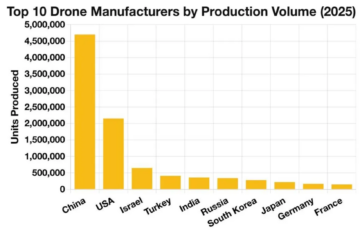
The Ukraine War isn’t the first war in which drones are proving decisive — that would be the Second Nagorno-Karabakh War in 2020 — but it’s the war in which drones have truly come into their own. Ukraine’s intensive use of drones has allowed them to inflict casualty rates as high as 5 to 1 on the Russian army in recent months, while giving up little or no territory. Around 96% of those casualties are estimated to be caused by drones. In just the past year, Ukraine went from using just a few thousand FPV drones per day to using around 60,000.

You can read lots of stories about how drones represent a revolution in military affairs; the recent Carnegie Endowment piece is a good one, as is the slightly older one by the Army University Press. But to really viscerally understand how deeply things have changed, you have to watch videos from the war. Here is a montage of drone strikes in Ukraine, including a terrifying final sequence where a drone flies into a Russian barracks and destroys it. It’s difficult stuff to watch, but if you want to understand the changes that have come to modern warfare, you have to see it.

More here.

Enjoying the content on 3QD? Help keep us going by donating now.

Read the whole story
aoiphe
77 days ago
reply
Share this story
Delete

AI and the Diffusion of Responsibility: Dispatches From the Road

1 Share

Over the past several months, I have had the opportunity to speak with leaders across a range of sectors about artificial intelligence. These conversations have taken place in boardrooms, universities, professional development seminars, and informal gatherings following presentations. The contexts vary and the industries differ, however a common pattern has begun to emerge.

The organizations I encounter are not dismissive of AI. Quite the opposite. Most are experimenting with generative tools, reviewing internal processes, or considering policy development. Many have established working groups. Some have launched pilot projects. Others are waiting for clearer regulatory direction before moving further. At first glance, the tone is thoughtful and measured.

Beneath that surface, however, a more subtle but significant governance issue is taking shape.

In this column, I want to discuss three of the most common responses I am hearing when from senior managers, lawyers and executives when discussions turn to responsibility for AI risk. The responses to questions around responsibility for AI initiatives or risk management often take a familiar form: “We have a committee.” “IT says it’s fine.” “We trust our people to use it responsibly.” Each of these statements is reasonable in isolation and signals that attention is being paid. Taken together, however, they reveal a more concerning pattern, namely the diffusion of responsibility across structures, departments, and organizational culture.

AI governance is uniquely prone to this problem. Unlike traditional technology deployments, AI systems sit at the intersection of technical infrastructure, professional judgment, regulatory exposure, and institutional strategy. When accountability is distributed thinly across committees, delegated entirely to technical teams, or left to individual discretion, no single actor retains clear ownership of the risk.

This column is not about fault-finding. The individuals involved in these conversations are uniformly thoughtful and well-intentioned, and the issue is structural rather than personal. As AI tools become more deeply embedded in everyday workflows, however, structural ambiguity around responsibility is becoming a material governance risk.

In what follows, I examine three statements I continue to hear “from the road” and what they reveal about the current state of AI oversight. The objective is not to criticize but to clarify. In the context of artificial intelligence, clarity of responsibility may be among the most important governance tasks ahead.

“We Have a Committee.”

In many of the organizations I encounter, the first response to questions about AI oversight is reassuring: “We have a committee.” Often this committee is cross-functional and includes representatives from IT, legal, compliance, operations, and senior management. It meets periodically, monitors developments, and in some cases is tasked with drafting policy.

At first glance, this appears to be an appropriate institutional response. Artificial intelligence is a cross-cutting issue that touches infrastructure, professional standards, privacy law, human resources, procurement, and strategy. A cross-functional body reflects the reality that no single department can address these issues in isolation.

Committees are also not inherently flawed. They are frequently composed of thoughtful and capable professionals who are attempting to approach a complex issue carefully. In many organizations, the formation of a committee signals that leadership recognizes AI as something that warrants structured attention rather than informal experimentation. The challenge lies in the nature of committees themselves. They are designed to deliberate, to gather information, and to provide recommendations. They are not typically designed to assume concentrated risk ownership.

In practice, committee members usually carry full portfolios. AI oversight becomes one item among many. Meetings are periodic and mandates are often exploratory rather than executive. Recommendations may be developed, but ultimate accountability can remain unclear. When responsibility is shared across a group, clarity about who ultimately owns the consequences of a decision can diminish.

There is also a practical reality that should be acknowledged. Artificial intelligence is technically complex and rapidly evolving. Even experienced professionals may not have the time required to develop sustained, specialized literacy in the tools under discussion. Without dedicated authority, expertise, and resourcing, committees can become monitoring bodies rather than governance mechanisms.

At the same time, AI deployment is no longer theoretical. Generative tools are already embedded in everyday workflows, sometimes formally approved and sometimes adopted informally by staff seeking efficiency. When technology moves faster than governance structures, an exploratory committee model may prove insufficient.

Cross-functional dialogue remains essential. However, dialogue alone does not constitute accountability. Effective AI oversight requires clarity about who is responsible for risk assessment, policy approval, escalation decisions, and ongoing monitoring. Absent that clarity, the reassuring statement “we have a committee” may mask a more difficult question about ownership.

“IT Says It’s Fine.”

Another response I frequently hear, particularly in public sector and government contexts, is this: “IT says it’s fine.”

This response is understandable. Information technology departments play an essential role in evaluating software tools. They assess cybersecurity vulnerabilities, data storage architecture, vendor compliance, and integration with existing systems. In many organizations, IT teams are the first line of defense against technical instability and data breaches, and their expertise is indispensable.

The difficulty arises when technical clearance is treated as synonymous with overall approval.

IT departments typically manage technical risk, including whether a system is secure, compatible, and operationally stable. Artificial intelligence, however, introduces a broader range of concerns that extend beyond infrastructure. AI systems can affect professional obligations, regulatory exposure, fiduciary duties, human rights considerations, reputational risk, and the integrity of institutional decision-making. These are governance questions rather than purely technical ones.

In regulated professions such as law or medicine, individual practitioners carry independent duties that no technical clearance can discharge. A tool may be secure from a cybersecurity perspective and yet still generate inaccurate outputs, embed bias, or encourage overreliance in ways that create professional liability. Technical approval does not resolve questions about appropriate use, supervision, documentation, or compliance with professional standards.

This observation is not a criticism of IT teams. It is a clarification of institutional roles. Expecting technical departments to assume responsibility for enterprise-wide ethical and regulatory risk places them in a position that extends beyond their mandate. It may also allow senior leadership to conclude that oversight has been achieved when, in reality, only one dimension of risk has been addressed.

AI governance requires coordination among technical expertise, legal analysis, operational leadership, and strategic oversight. When the phrase “IT says it’s fine” becomes the end of the conversation rather than the beginning of a broader assessment, responsibility is once again dispersed rather than clearly assigned.

“We Trust Our People to Use It Responsibly.”

A third response I often hear is more values-oriented: “We trust our people to use it responsibly.”

This statement reflects confidence in professional judgment and organizational culture. Institutions depend on individuals exercising discretion and acting in good faith, and in many contexts that trust is warranted.

Trust alone, however, does not amount to a governance framework.

Artificial intelligence tools differ from many technologies that preceded them. They do not merely transmit information. They generate it. They summarize, interpret, draft, and recommend. In doing so, they may also fabricate, distort, or oversimplify. Their outputs can appear authoritative even when they are incorrect. This combination of fluency and fallibility creates a distinctive risk profile.

Where organizations rely primarily on individual discretion without articulated policy guidance, training, and oversight, responsibility shifts downward in subtle ways. Professionals are left to determine for themselves when AI use is appropriate, how outputs should be verified, what documentation is required, and how client or stakeholder interests may be affected. Practices can become inconsistent, and risk tolerance may vary across departments or individuals.

If an error occurs, the absence of clear institutional guardrails can produce further ambiguity regarding responsibility. Without defined expectations, it may be difficult to determine whether a failure reflects individual judgment or structural oversight.

Trust remains an essential organizational value. It is strengthened, rather than diminished, by clear parameters, defined accountability, appropriate training, and ongoing monitoring. Without those elements, reliance on individual discretion may again reflect diffusion rather than ownership.

Why AI Is Especially Prone to Diffusion

Taken individually, each of these responses is understandable. Committees promote collaboration. IT departments safeguard infrastructure. Trust reflects institutional confidence. The difficulty emerges when these mechanisms are treated as complete.

Artificial intelligence occupies an unusual position within institutions. It depends on technical infrastructure, engages legal and regulatory exposure, shapes operational workflows, and influences strategic direction. Because it sits at the intersection of so many functions, it can easily fall between them.

Committees discuss it. IT evaluates it. Professionals use it. Legal teams review it when prompted. Risk managers may include it within broader enterprise risk frameworks, and boards may receive periodic updates. Yet in many organizations there is no clearly designated owner of AI risk as such. Responsibility is distributed, but ultimate accountability remains indistinct.

Enterprise risk management frameworks are designed for issues that cut across silos. They require identification of risk owners, articulation of risk appetite, defined escalation pathways, and ongoing monitoring. Artificial intelligence fits squarely within that category. Treating it as a temporary project or purely technical deployment risks underestimating its institutional impact.

Where no one clearly owns AI risk, many may participate in it, yet no single actor remains accountable for its consequences. That dynamic reflects the essence of diffusion of responsibility.

Conclusion

Artificial intelligence is advancing through institutions at a pace that challenges traditional governance structures. Its adoption is rarely reckless. More often, it is incremental and pragmatic. Tools are introduced to increase efficiency. Staff experiment to improve workflows. Committees monitor developments. Technical teams evaluate vendors. Professionals exercise judgment.

When responsibility is dispersed across structures, functions, and culture, however, clarity can erode. Oversight may appear present while ownership remains indistinct.

AI systems influence outputs, shape decisions, and generate content that may carry legal, professional, or reputational consequences. In a regulatory environment that continues to evolve and where enforcement bodies are interpreting existing legal frameworks in new ways, institutions cannot rely on ambiguity as a safeguard.

Governance requires definition. It requires clear assignment of responsibility, defined escalation pathways, and articulated expectations for use. These mechanisms provide the foundation for sustainable innovation.

The statements examined here reflect common and understandable institutional instincts. Collaboration, deference to expertise, and confidence in professional judgment each have value. None, however, replaces the need for clearly defined ownership of AI risk within the organization.

As AI becomes embedded in everyday practice, thoughtful adoption will matter less than clear accountability. Institutions that define ownership early will be better positioned than those that later discover that responsibility was distributed broadly but held nowhere in particular.

Note: Generative AI was used in the preparation of this article.

The post AI and the Diffusion of Responsibility: Dispatches From the Road appeared first on Slaw.

Read the whole story
aoiphe
128 days ago
reply
Share this story
Delete

Corporate capture of Canada’s regulatory state is worse than ever

1 Share

Six years ago, my edited volume, Corporate Rules: The real world of business regulation in Canada: How government regulators are failing the public interest, was published. The book sought to unveil how, and in whose interests, the federal government regulates, and its consequences.

What has happened since its publication? While it would be difficult to provide a comprehensive update of the book given the many contributors and sectors analyzed, we can delve into two sectors: environment and railway transportation. Similar analyses can and should occur in a wide range of sectors.

First, some basics: regulations are the mechanisms which implement government policies and legislation. According to the federal government’s “Cabinet Directive on Regulation” document, their primary purpose is to advance the public interest including protecting citizens’ health, safety, security, social and economic well-being, and the environment. Their purpose, as stated, is also to support a fair and competitive economy that benefits Canadians and Canadian businesses.

The tension between these goals has compromised the public interest in favour of corporate interest (profits and shareholder value) and those of government enablers. In many cases, corporations themselves are the ones defining priorities and helping to create regulations in their own interest. This relationship is termed regulatory capture.

Key federal policy, legislative, and regulatory initiatives since the book’s release

Many Canadians support Prime Minister Carney’s management of the Canadian economy and its relationship with the U.S. in these turbulent times. Far fewer understand Carney’s position that “Canada has too much regulation and not enough action,” and the federal government’s corresponding actions to deregulate the Canadian economy.

In July 2025, the President of the Treasury Board,  Shafqat Ali,  announced the launch of a “Red Tape Review” of regulations across federal departments, its purpose to eliminate outdated regulations and reduce duplication with provincial rules. 

If history is any guide, “eliminating red tape” (i.e., deregulation) is invariably accompanied by fiscal austerity—including cuts to regulatory agencies, notably staff who propose, monitor, and enforce regulations. Gutting regulatory resources increases pressure to enable private companies corporations to self-regulate compromising public safety, at times with catastrophic consequences, such as the Lac-Mégantic rail. disaster

The corporate co-optation of regulatory agencies over the last four decades was characterized by author John Ralston Saul as a “corporate coup d’état in slow motion”

The Red Tape Review is consistent with the Carney government’s Building Canada Act (Bill C-5), the so-called One Canadian Economy Act which gives the cabinet unilateral power to prioritize and fast track projects without scientific review, including scrapping regulations it views as red tape. 

Proponents of red tape reduction claim, without evidence, that reducing the so-called regulatory burdens are not about eliminating protections for health, safety, and the environment. Rather it is about “smarter regulation,” ensuring rules are up to date, proportionate, and designed with competitiveness in mind. 

We’ve heard this story before.

A Red Tape Review progress report identified nearly 500 measures to reduce alleged administrative burdens for businesses and workers. A Red Tape Reduction Office has been created to oversee their implementation.

Long time problems with Canada’s regulatory regime remain. Its whistleblower protections and access to information laws are among the weakest in the world, further hindering public oversight and enforcement of regulations. The Federal Information Commissioner recently excoriated the government about the dismal state of access to information. None of these real problems are considered “red tape” in need of cutting—rather, the deregulation is likely to make them worse.

Budget 2025 

The 2025 federal budget, unveiled in November, outlines plans to reduce federal spending by $60 billion over the next five years—eliminating an estimated 40,000 positions in the public service by 2028-29, roughly 10 per cent of the total workforce. This will undoubtedly include more cuts to regulatory agencies.

The Budget Implementation Act (Bill C-15), it should be noted, does not become law until passed by Parliament. If opposition parties unite to vote it down, the failed legislation would trigger an election, but this is highly unlikely. 

The Act gives Ministers power to exempt any individual or company from any federal law or regulation— except for the Criminal Code — for up to six years. This provision means that corporations would be able to ignore laws and regulations so long as they have at least one minister in agreement. This would be a blatant violation of the democratic responsibility of parliament to determine laws and regulations.

Edgar Schmidt, former General Counsel in the Department of Justice, wrote in Corporate Rules: the DOJ “sees the preferences and political interests of ministers as higher priorities than the decisions passed by parliament. Under this legislation, Cabinet is further sidelining Parliament.

Environmental Regulations

Canada’s Nationally Determined Contributions (NDC) represent its commitment under the Paris Agreement to reduce CO2 emissions 40 to 45 per cent below 2005 levels by 2030, and by 45 to 50 per cent below 2005 levels by 2035. According to the latest report of Canada’s Commissioner of the Environment and Sustainable Development, emissions have been reduced by only 8.5 per cent since 2005.

Oil and gas industry production is Canada’s largest source of greenhouse gas emissions, accounting for one third of Canada’s emissions. Its planned increase in oil production by 2030, ranks behind only Saudi Arabia’s planned production growth in the same period.

Canadian banks are among the largest financiers of fossil fuels globally. The federal government has thus far not aligned Canada’s financial institutions with Canada’s climate commitments.

So, what has the Carney government done to fulfil its role in fighting the climate threat to the planet?

The Memorandum of Understanding with Alberta agreed to a pathway toward a new bitumen pipeline to the Northern B.C. coast and suspended the Clean Electricity Regulations.

The Canadian Environmental Law Association warns that the Build Canada Act could fast-track environmentally risky mega-projects across the country while undermining federal laws designed to safeguard the environment, human health, and Indigenous rights.

Budget 2025 formally abandons the oil and gas sector emissions cap. It commits to weakening federal anti-greenwashing legislation that prevents oil and gas companies from lying about their environmental impacts.

It cuts at least $3 billion in climate-related federal spending including a home energy efficiency retrofitting program, the Net-Zero Accelerator program for clean technology, funding for public transit and the government’s promise to plant two billion trees.

Both the carbon capture tax credit and a tax break for liquefied natural gas (LNG) facilities were expanded at an additional cost of $325 million over the next five years.

The government commits to strengthening the industrial carbon pricing system but provides no concrete details. Finalized regulations to reduce methane emissions are delayed indefinitely. And the long-awaited sustainable finance taxonomy, which would clarify the investment categories that are considered “green,” is also delayed.

The government’s first five “nation-building” projects under review by its Major Projects Office include the doubling of production of a liquified natural gas facility in Kitimat, B.C. As Hadrian Mertins-Kirkwood writes, The budget “represents a dramatic abdication of environmental leadership and a troubling step backward for climate action in Canada.”

Recalibrating Climate Risks, a report by Carbon Tracker Initiative, concluded that assessments of climate risks by Canadian corporations, financial institutions, and governments— their regulations and actions—are dangerously out of touch with the catastrophic consequences of planetary heating.

Railway Transportation 

Under company pressure, Transport Canada still has not mandated modern breaking systems on trains— electronically controlled pneumatic (ECP) brakes. Nor has it implemented a system to remotely stop unintended train movement, a system known as positive train control.

The Transportation Safety Board (TSB) Watchlist, created to highlight “those issues posing the greatest safety risks to Canada’s transportation system.” warned in its Watchlist 2025 that the following risks still not dealt with by Transport Canada include: 

  • Railway companies continue to resist installing effective fatigue management practices for workers in accordance with science. 
  • They have not mandated physical fail-safe defences that can intervene to slow or stop a train when signals are missed increasing the risk of collisions and derailments.
  •  Transport Canada’s surveillance has not always been effective in detecting non-compliance or ensuring timely corrective action.

The fox watching the henhouse 

As Linda McQuaig writes, Carney’s deregulation mindset is reinforced by his deep connections with the corporate establishment, and so we are not likely to see this agenda slowing down in the near future.

Corporate Rules is as relevant, if not more so, today. The effectiveness of regulations, of regulatory oversight, compliance, and enforcement, have continued to deteriorate. Corporate capture of regulations has strengthened. Profit is taking even greater priority over safety. The present reality is akin to the fox overseeing the henhouse with fewer safeguards in place to guard the fox.

If Canada is serious about restructuring its economy in the face of threats from the U.S. and global instability, we need to take control of our own regulatory apparatus. Otherwise, the risk of disaster on the horizon looms larger.

The post Corporate capture of Canada’s regulatory state is worse than ever first appeared on CCPA.

The post Corporate capture of Canada’s regulatory state is worse than ever appeared first on CCPA.

Read the whole story
aoiphe
164 days ago
reply
Share this story
Delete

The End of Heated Rivalry

1 Share

Hello friends.

Out past ideas of rightdoing and wrongdoing there is a cottage via GIPHY

This IS a post about a Canadian former hockey player.

It’s NOT a post about beautiful boys kissing—except it is, a little bit, at the end. So stay tuned.

The Golden Hour exists thanks to paid subscribers. 25% off for 1 more week if you upgrade now!

As we pass the one year mark of the second Trump presidency, what’s coming clearly into focus is not only the reign of terror at home, but the self-immolation of US standing in the world.

Jonathan Last in :

“We are witness to something rare in human history: Abdication by the leader of the global order.

We have seen empires fall and civilizations crumble. But we’ve almost never seen a people renounce their leadership of the world—all at once, in full public view.1 That is what has happened in the 365 days since January 20, 2025.”

Robert Kagan in The Atlantic:

The Trump administration’s National Security Strategy made it official: The American-dominated liberal world order is over…United States has decided that it no longer wishes to play its historically unprecedented role of providing global security.

The American might that upheld the world order of the past 80 years will now be used instead to destroy it.

This world order is the only one I have ever known, the only one most people on Earth have ever known. I have enjoyed a beautiful, vibrant and secure life in the center of Empire.

It’s also a world order based on centuries of domination, violence, inequality and hypocrisy.

What many fear now is a world where only the hypocrisy is gone, and everything else is much worse.

One of my favorite quotes is by the French aphorist Francois de La Rochefoucauld: “Hypocrisy is the tribute that vice pays to virtue.”

Without the willingness to pay that tribute, you get Steven Miller on CNN recently: “You can talk all you want about international niceties and everything else, but we live in a world, in the real world, Jake, that is governed by strength, that is governed by force, that is governed by power.”

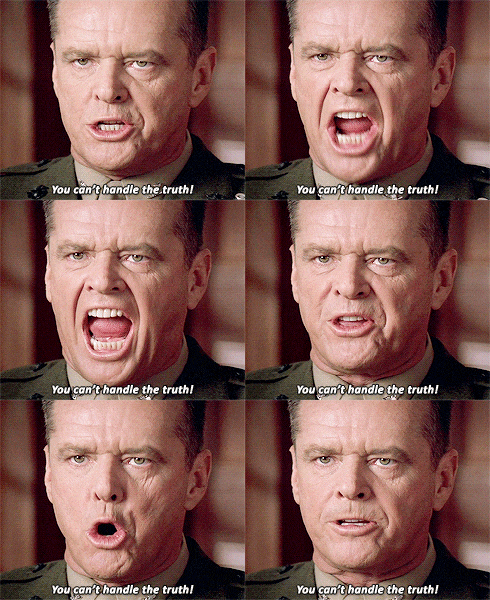
Which is rich, coming from this pathetic, weak, privileged, cowardly hatemonger who’s never faced real danger for one moment in his life, whose power comes from sucking up to terrible people. I think he’s unconsciously parroting Jack Nicholson’s speech in A Few Good Men, which came out when he was 7 years old: “We live in a world that has walls, and those walls have to be guarded by men with guns. Who’s gonna do it? You?”

With cruel idiots like this in charge, the new world could, for sure, be a lot more dangerous and unstable.

Kagan again: “Americans are entering the most dangerous world they have known since World War II, one that will make the Cold War look like child’s play and the post–Cold War world like paradise. In fact, this new world will look a lot like the world prior to 1945, with multiple great powers and metastasizing competition and conflict.”

But it’s also at least possible that something else could emerge, alongside and in tension with this scenario.

Former hockey player Mark Carney, the current prime minister of Canada, gave a remarkable speech in front of Davos on January 20th. Remarkable for its candor, its clarity, and for an actually innovative and hopeful vision.

“Today I will talk about a rupture in the world order, the end of a pleasant fiction and the beginning of a harsh reality,” he said.

The pleasant fiction is that there was ever a rules-based order. There was, but only when it suited the United States. For eight decades we were the world’s policeman, and we put our knee on the neck of anyone who looked at us funny.

Carney: “…the strongest would exempt themselves when convenient…trade rules were enforced asymmetrically…international law applied with varying rigour depending on the identity of the accused or the victim.”

So there was peace—the kind of peace that comes after an abusive husband yells at the whole family to SHUT UP.

Now there is a different kind of power in play. In French, Carney said:

“la puissance des moins puissants commence par lhonnêteté.”

“the power of the less powerful starts with honesty.”

“La puissance,” not “le pouvoir.” I am not a French speaker, but I catch a vibe in the choice of the feminine noun.

Carney invoked Vaclav Havel’s The Power of the Powerless, an account of overcoming authoritarianism by “living the truth.”

That is clearly what is happening in Minneapolis, where a whole community is standing up and blowing the whistle, where there is something like a general strike today, something we haven't seen in America in modern memory.

“The powerful have their power. But we have something too: the capacity to stop pretending, to name realities, to build our strength at home and to act together.”

He talked about building a world based on shared values, and a combination of both self-reliance and strategic alliance. Collective investments in resilience for mutual benefit. Doubling down on the power of legitimacy, integrity and rules, but by true mutual agreement, not by force.

It’s ultimately the people’s job to keep politicians honest and make noise when they’re bullshitting. I know that when Carney says “strategic autonomy in energy,” it’s partially code for “tar sands pipeline.”

But the vision Carney has introduced, of a world with more equally distributed power, greater honesty and integrity, and even some re-localization of essential resources, appeals to me enormously. It feels like a step toward what Joanna Macy calls The Great Turning, actually.

Which gets me to the most important question of the moment: why do people—women, especially—love Heated Rivalry, the Canadian gay hockey romance?

writes that it’s an “anti-dystopian” show. Because what you are seeing is romance free of the domination dynamics of patriarchy.

In the grip of patriarchy, too often men and women enact toxic romantic dynamics that are very similar to what we accept in the global order: Surveillance. Disregard of boundaries. Economic dependence. Looming threat of physical force. Or simply the more casual, insidious assumption that the wealthier and more powerful entity is going to set the agenda, do the most talking, and direct what to do.

In “Heated Rivalry,” Rozanov and Hollander have their differences. They each have strengths and weaknesses. They compete fiercely on the ice, but it doesn’t cross over to their personal lives. It's love among equals.

What Heated Rivalry removes is not desire or dominance, but the structural conditions that allow domination to flow in one direction.

That lets us somatically experience a future beyond what exists now, a future we all actually want. Joy in the present makes joy in the future seem plausible. And that, too, is hope.

I wish you all some warmth and joy this weekend, despite the storms that surround us.


Come study and practice with me!

I’m offering a 5-week online program, February 26 – March 26, 2026, in line with my forthcoming book, to examine our collective emotional responses to the crises of our time and learn to find inspiration even in the depths of despair.

Explore your emotions with curiosity – building resilience and working with the energy within our bodies. The Institute for Jewish Spirituality has a number of wonderful offerings you can check out here; you don’t need to be Jewish to sign up!

____________________________________________

ICYMI :
I had so much fun chatting with and on Substack Live this week about making friends as an adult, inspired by this post:

Listen for how they complete each others’ De Tocqueville quotes. True #couplegoals.

Read the whole story
aoiphe
193 days ago
reply
Share this story
Delete

Is Suzuki right that it's 'too late'? We are in an era of simultaneous wins and losses

1 Share
All of us who work on climate have long walked a razor’s edge between hope and despair, and the last few months (or years) have made it near impossible to keep one’s balance. But I would put the current predicament differently than saying it’s “too late.”
Read the whole story
aoiphe
386 days ago
reply
Share this story
Delete
Next Page of Stories